Did you know that nearly 70% of employees say their leader’s words directly affect their motivation and performance? That’s the power of language in action. Leadership isn’t just about strategy or vision—it’s about the words you choose daily. The right verbs for leadership can inspire, energize, and unite a team, while the wrong ones can create doubt and disengagement.
If you’ve ever wondered why your instructions don’t land the way you hoped or why your team hesitates to follow through, the answer may lie in the verbs you use. Words like guide, empower, and ignite do far more than instruct—they shape culture and set the tone for success.
In this article, we’ll explore the most impactful verbs for leadership and show you how to use them to strengthen communication, boost trust, and motivate people into action. By the end, you’ll have a powerful toolkit of language that transforms the way you lead.
Strong leadership isn’t just about vision—it’s also about the words you use to inspire, direct, and influence others. The way leaders communicate shapes how their teams perceive them, and that’s where verbs for leadership become powerful tools. These action-driven words signal confidence, authority, and purpose, helping leaders convey direction with clarity and impact.
1. What Are Leadership Verbs?
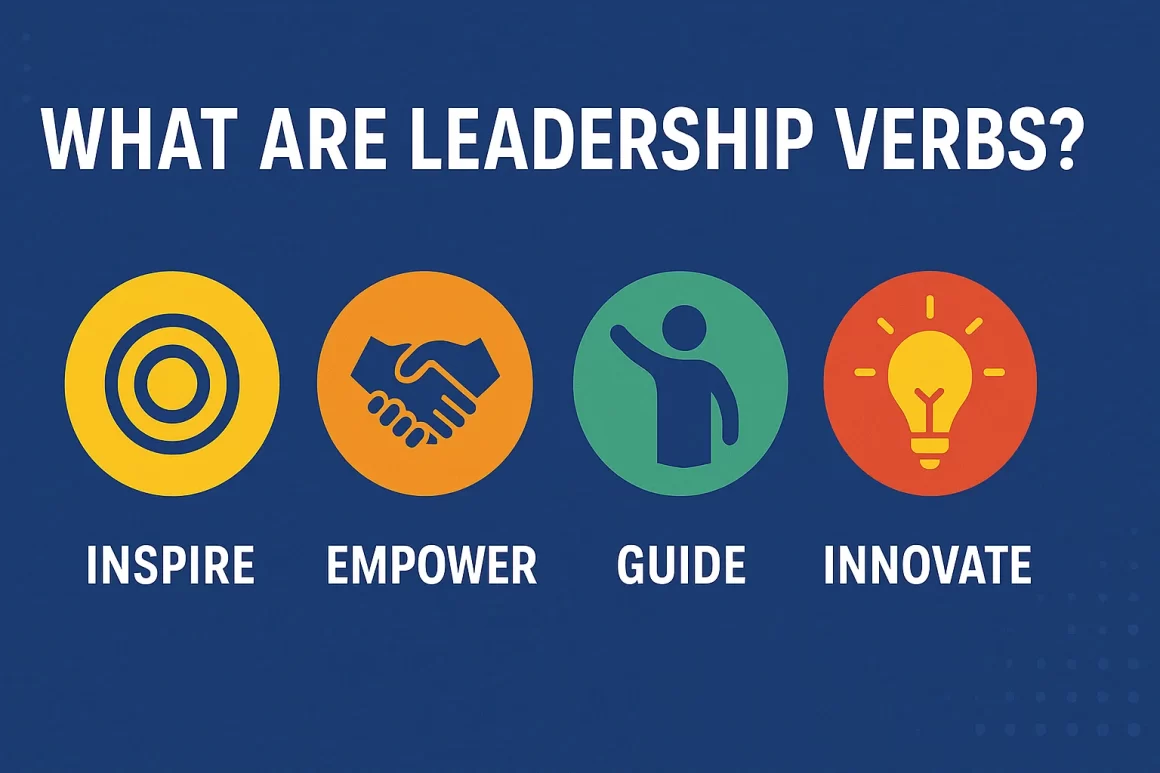
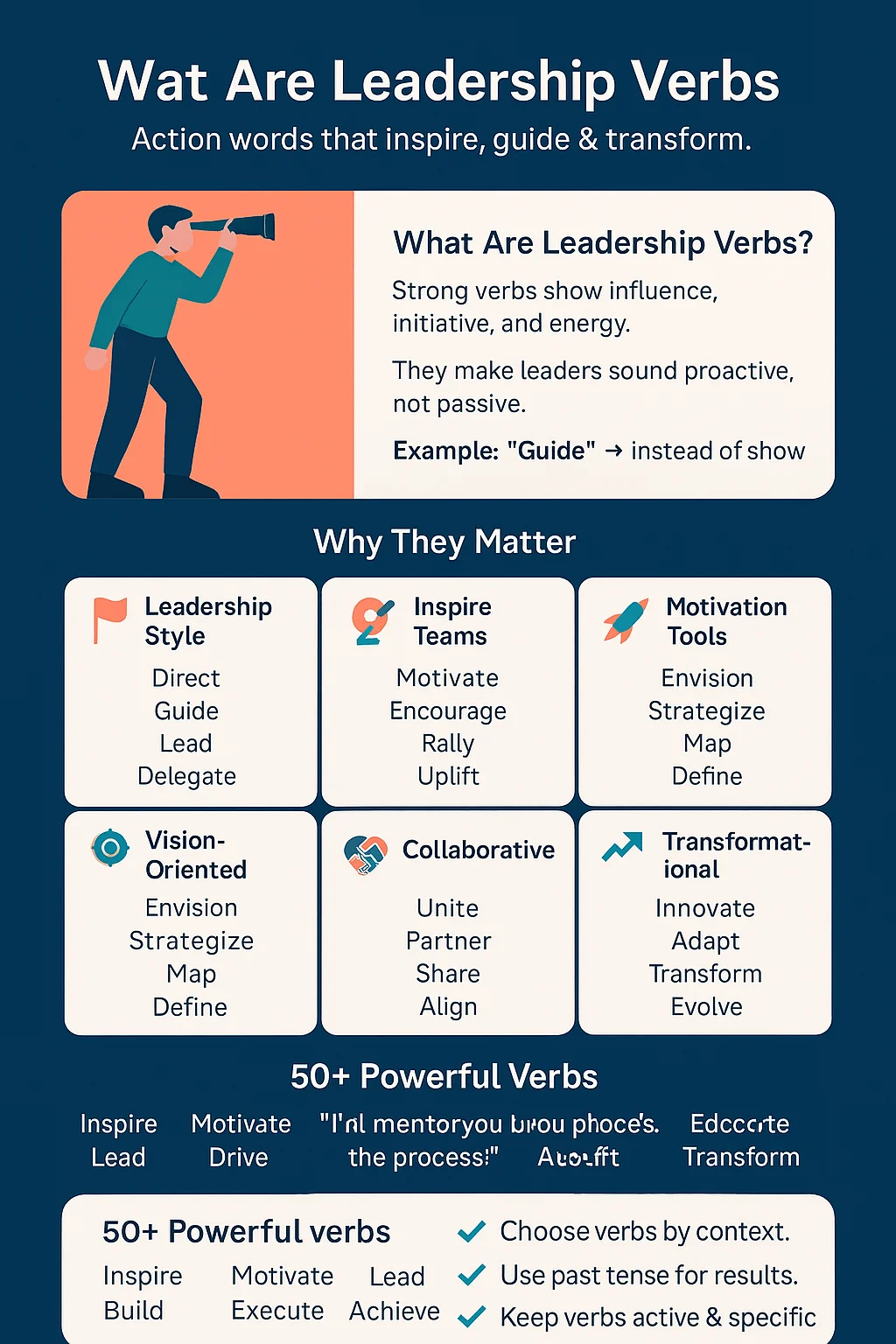
Leadership verbs are action verbs that highlight influence, decision-making, and motivation. Instead of vague or passive language, they emphasize strength and initiative. For example:
- “Guide” instead of “show”
- “Empower” instead of “help”
- “Drive” instead of “do”
On a leadership resume, such verbs instantly communicate capability and authority, making hiring managers see you as proactive rather than reactive.
Why Action-Oriented Verbs Define Strong Leadership
Leaders are measured not only by what they achieve but also by how they inspire others to act. Action verbs for leadership resumes like “spearheaded,” “orchestrated,” or “transformed” tell a story of initiative and achievement. They demonstrate results, rather than mere responsibilities.
Have you ever noticed how one simple change in phrasing—“I managed a team” vs. “I motivated and guided a team”—can completely change the impact? That’s the psychology of powerful verbs at play.
The Psychology of Using the Right Leadership Verbs
Words influence perception. According to leadership psychology studies, language with active verbs for leadership creates trust, energy, and forward momentum. Using power verbs for leadership like “ignite,” “unify,” or “champion” not only reflects what you’ve done but also inspires confidence in your ability to lead future initiatives.
When woven into everyday conversations, team meetings, or even a resume, these verbs can shape how others view your leadership skills. They turn passive descriptions into dynamic narratives—making your leadership presence stronger and more persuasive.
Importance of Verbs in Leadership Communication
Leaders don’t just give instructions—they inspire action. The verbs they use shape how people see them and how teams respond.
2. Verbs Shape Leadership Style
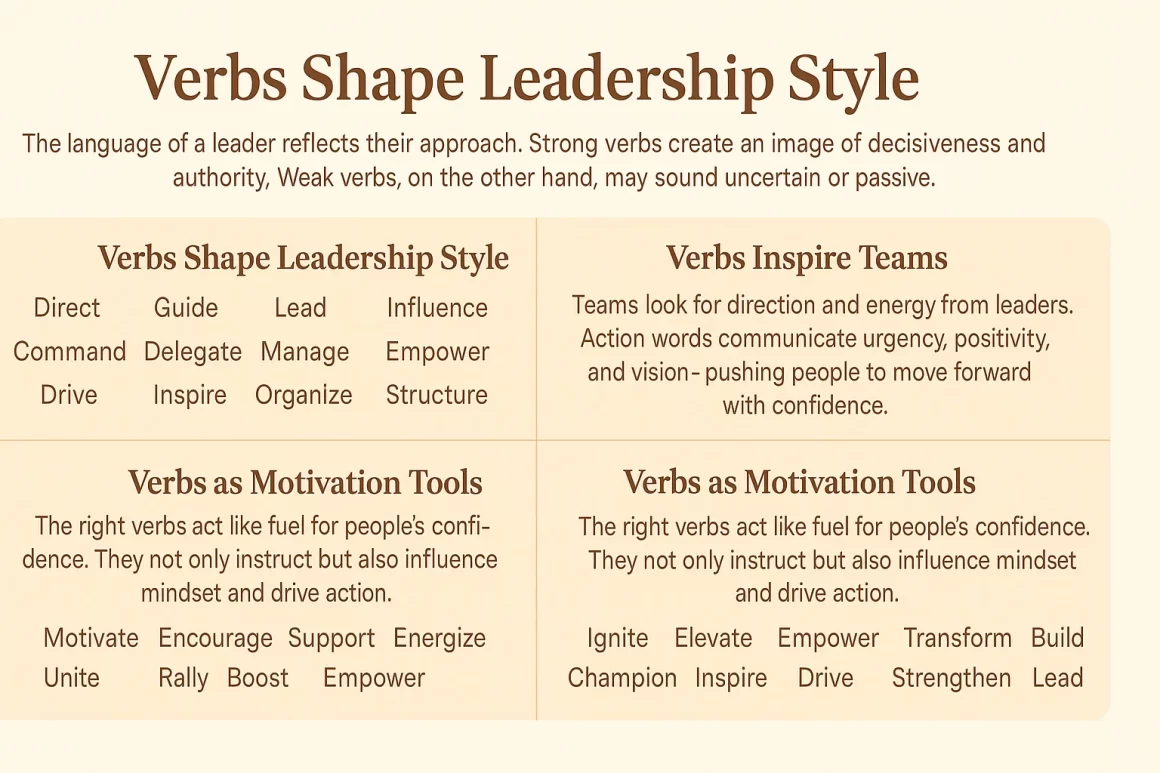
The language of a leader reflects their approach. Strong verbs create an image of decisiveness and authority. Weak verbs, on the other hand, may sound uncertain or passive.
Examples of leadership style verbs on leadership:
- Direct
- Guide
- Lead
- Influence
- Command
- Delegate
- Manage
- Empower
- Drive
- Inspire
- Organize
- Align
- Coordinate
- Facilitate
- Structure
Verbs Inspire Teams
Teams look for direction and energy from leaders. Action words communicate urgency, positivity, and vision—pushing people to move forward with confidence.
Examples of inspiring verbs:
- Motivate
- Encourage
- Support
- Energize
- Unite
- Rally
- Boost
- Empower
- Celebrate
- Recognize
- Mentor
- Inspire
- Spark
- Uplift
- Guide
3. Verbs as Motivation Tools
The right verbs act like fuel for people’s confidence. They not only instruct but also influence mindset and drive action.
Examples of motivational and influential verbs:
- Ignite
- Elevate
- Empower
- Transform
- Champion
- Inspire
- Drive
- Strengthen
- Build
- Cultivate
- Advance
- Propel
- Achieve
- Encourage
- Lead
4. Categories of Verbs for Leadership
These verbs show foresight and long-term thinking.
- Envision
- Forecast
- Strategize
- Map
- Design
- Shape
- Plan
- Outline
- Anticipate
- Predict
- Define
- Imagine
- Project
- Create
- Set
Empowering Verbs
They help leaders give authority, confidence, and trust to their teams.
- Empower
- Delegate
- Authorize
- Entrust
- Encourage
- Support
- Endorse
- Assign
- Enable
- Facilitate
- Guide
- Strengthen
- Mentor
- Back
- Sponsor
Motivational Verbs
These verbs spark energy, resilience, and determination.
- Motivate
- Inspire
- Energize
- Rally
- Uplift
- Drive
- Boost
- Stimulate
- Spark
- Reinforce
- Encourage
- Empower
- Accelerate
- Push
- Propel
Collaborative Verbs
They build teamwork, harmony, and connection.
- Collaborate
- Unite
- Join
- Partner
- Cooperate
- Network
- Align
- Integrate
- Connect
- Coordinate
- Engage
- Share
- Support
- Participate
- Synchronize
Transformational Verbs
Used to show change, growth, and innovation.
- Develop
- Transform
- Innovate
- Reshape
- Reimagine
- Reinvent
- Overhaul
- Modernize
- Improve
- Upgrade
- Adapt
- Revolutionize
- Advance
- Expand
- Evolve
5. Motivational Leadership Verbs
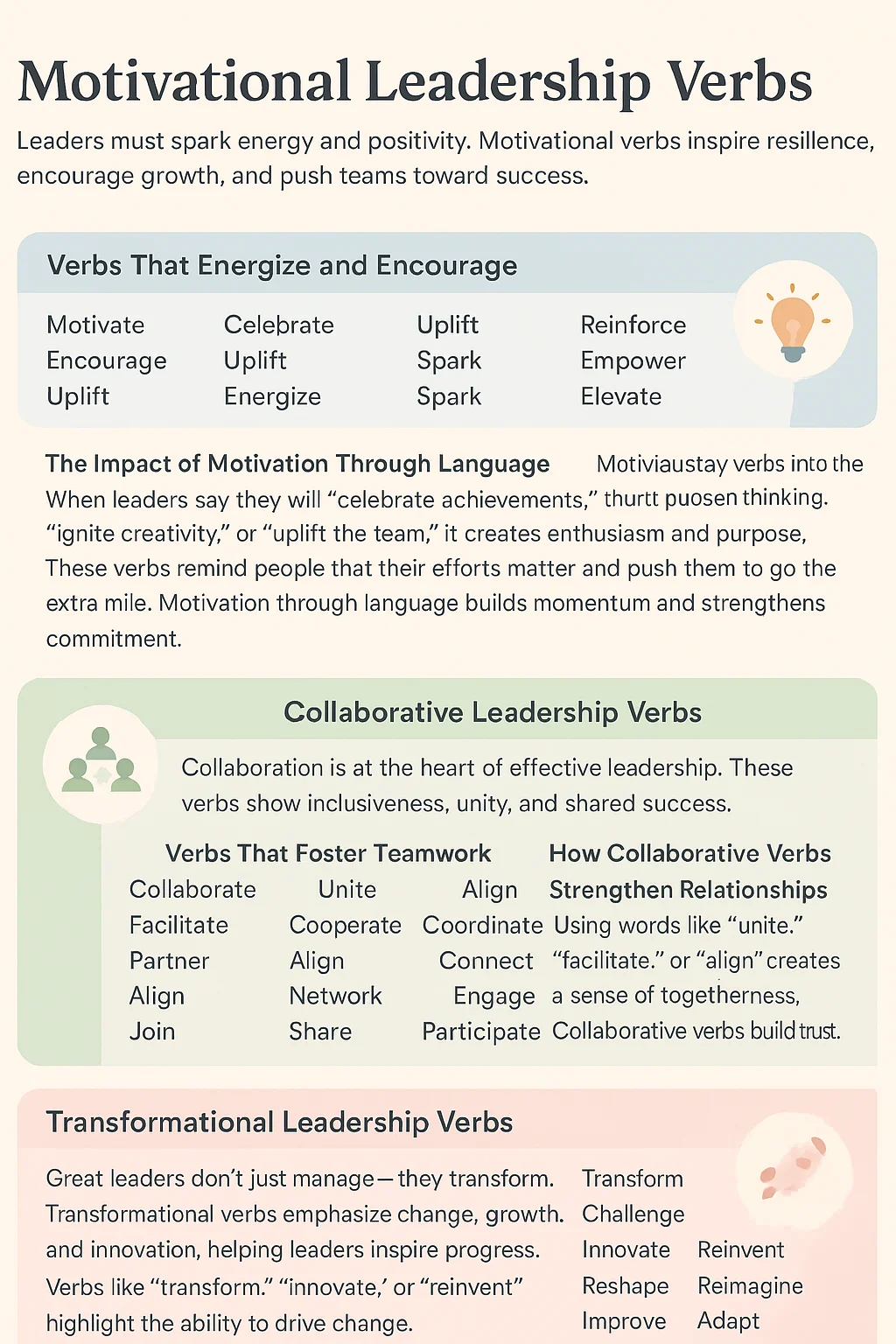
Leaders must spark energy and positivity. Motivational verbs inspire resilience, encourage growth, and push teams toward success.
Verbs That Energize and Encourage
- Motivate
- Celebrate
- Encourage
- Uplift
- Energize
- Rally
- Inspire
- Drive
- Boost
- Spark
- Reinforce
- Empower
- Elevate
- Propel
- Stimulate
The Impact of Motivation Through Language
When leaders say they will “celebrate achievements,” “ignite creativity,” or “uplift the team,” it creates enthusiasm and purpose. These verbs remind people that their efforts matter and push them to go the extra mile. Motivation through language builds momentum and strengthens commitment.
6. Collaborative Leadership Verbs
Collaboration is at the heart of effective leadership. These verbs show inclusiveness, unity, and shared success.
Verbs That Foster Teamwork
- Collaborate
- Unite
- Facilitate
- Partner
- Align
- Join
- Integrate
- Cooperate
- Coordinate
- Connect
- Network
- Engage
- Share
- Participate
- Synchronize
How Collaborative Verbs Strengthen Relationships
Using words like “unite,” “facilitate,” or “align” creates a sense of togetherness. Collaborative verbs build trust, reduce conflict, and help teams work toward common goals. They turn individual contributions into collective success.
7. Transformational Leadership Verbs
Great leaders don’t just manage—they transform. Transformational verbs emphasize change, growth, and innovation, helping leaders inspire progress.
- Transform
- Challenge
- Innovate
- Reinvent
- Reshape
- Reimagine
- Revolutionize
- Improve
- Adapt
- Expand
- Evolve
- Advance
- Overhaul
- Redefine
- Upgrade
Why Transformational Verbs Are Key
In today’s fast-changing world, leaders must show adaptability and forward-thinking. Verbs like “transform,” “innovate,” or “reinvent” highlight the ability to drive change. They inspire teams to embrace new ideas and continuously improve, which is essential for modern leadership.
8. 50+ Powerful Verbs for Leadership
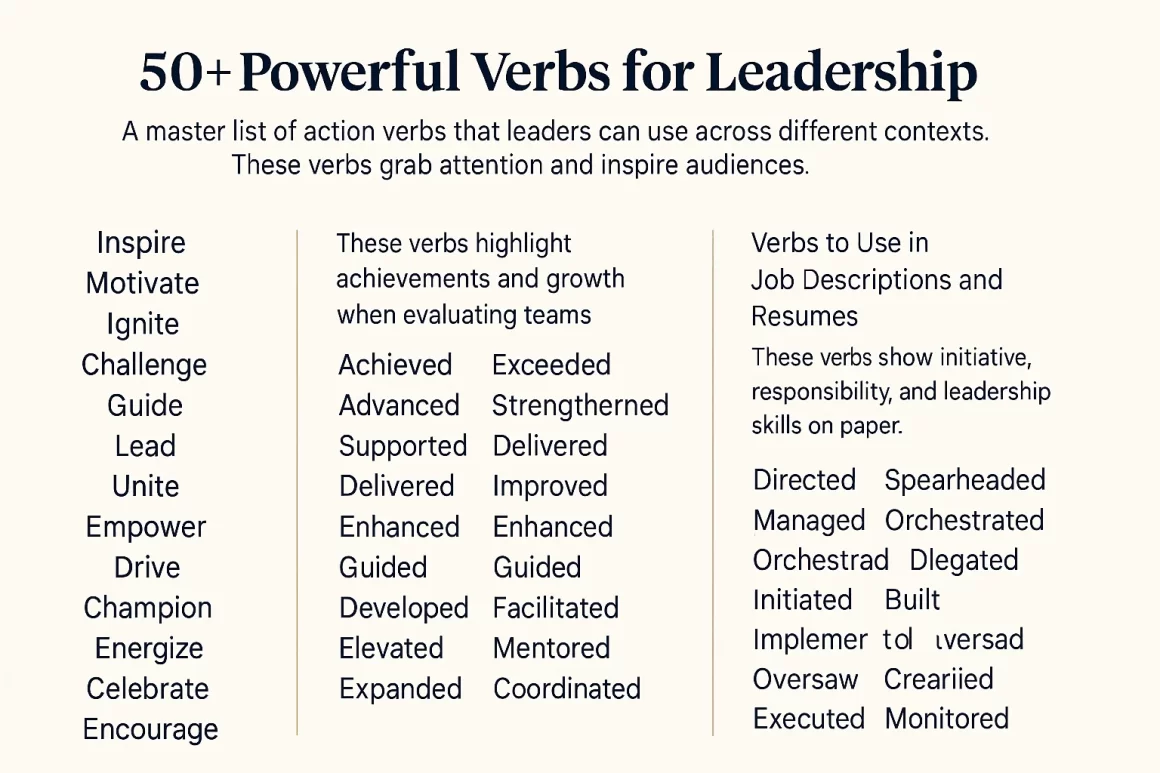
A master list of action verbs that leaders can use across different contexts. These verbs grab attention and inspire audiences.
- Inspire
- Motivate
- Ignite
- Challenge
- Guide
- Lead
- Unite
- Empower
- Drive
- Champion
- Energize
- Celebrate
- Encourage
- Advance
- Transform
These verbs highlight achievements and growth when evaluating teams.
- Achieved
- Exceeded
- Advanced
- Strengthened
- Supported
- Delivered
- Improved
- Enhanced
- Guided
- Developed
- Elevated
- Facilitated
- Mentored
- Expanded
- Coordinated
Verbs to Use in Job Descriptions and Resumes. These verbs show initiative, responsibility, and leadership skills on paper.
- Directed
- Spearheaded
- Managed
- Orchestrated
- Delegated
- Initiated
- Built
- Implemented
- Oversaw
- Created
- Executed
- Structured
- Defined
- Organized
- Monitored
Great communication is at the core of effective leadership. The right verbs strengthen public speaking, make meetings impactful, and show empathy in conversations.
Strong Verbs for Public Speaking
Examples
- Inspire
- Motivate
- Energize
- Lead
- Guide
- Ignite
- Empower
- Challenge
- Champion
- Drive
- Rally
- Encourage
- Unify
- Advocate
- Influence
Verbs That Command Respect in Meetings
Examples
- Direct
- Clarify
- Define
- Decide
- Address
- Lead
- Instruct
- Recommend
- Summarize
- Propose
- Assign
- Evaluate
- Resolve
- Structure
- Facilitate
Verbs That Show Empathy in Conversations
Examples
- Listen
- Understand
- Support
- Encourage
- Respect
- Appreciate
- Acknowledge
- Guide
- Value
- Affirm
- Recognize
- Assist
- Empathize
- Comfort
- Reassure
9. Verbs for Leadership in Writing
Written communication reflects leadership clarity. Using strong verbs in emails, reports, and resumes conveys authority, empathy, and decisiveness.
Leadership Verbs for Emails and Reports
Examples
- Inform
- Recommend
- Request
- Guide
- Clarify
- Summarize
- Outline
- Confirm
- Highlight
- Emphasize
- Direct
- Share
- Document
- Assign
- Support
Using Verbs Effectively in Executive Summaries
Examples
- Achieved
- Delivered
- Advanced
- Spearheaded
- Strengthened
- Implemented
- Improved
- Directed
- Elevated
- Established
- Coordinated
- Executed
- Led
- Transformed
- Expanded
Best Verbs for Leadership Resumes and LinkedIn
Examples
- Spearheaded
- Directed
- Managed
- Coordinated
- Orchestrated
- Built
- Initiated
- Executed
- Achieved
- Oversaw
- Guided
- Delivered
- Structured
- Innovated
- Transformed
10. Verbs for Leadership in Coaching and Mentorship
Coaching and mentorship are vital parts of leadership. Leaders who use guiding verbs show commitment to developing others and preparing them for future roles. These verbs emphasize growth, learning, and long-term success. They help create a supportive environment where individuals feel guided rather than controlled.
Examples:
- Coach
- Mentor
- Teach
- Guide
- Support
- Encourage
- Develop
- Nurture
- Train
- Empower
- Build
- Cultivate
- Advise
- Strengthen
- Inspire
By consistently using such verbs, leaders position themselves as role models who build trust and shape future leaders. Coaching verbs demonstrate patience, empathy, and vision—qualities that ensure leadership has a lasting impact.
11. Verbs for Leadership in Crisis Management
Crisis reveals the true strength of leadership. The verbs leaders choose during difficult times can either create panic or build trust. Using strong, steady, and adaptive verbs shows resilience and reassures teams. These words communicate calm, focus, and the ability to navigate uncertainty.
Examples:
- Stabilize
- Reassure
- Adapt
- Protect
- Defend
- Guide
- Resolve
- Manage
- Restore
- Secure
- Adjust
- Overcome
- Lead
- Support
- Direct
When leaders use crisis-focused verbs, they project confidence and competence. Such language helps teams stay calm, follow direction, and believe that challenges can be managed. This builds loyalty and strengthens credibility in the face of adversity.
12. Verbs for Leadership in Goal-Setting
Leaders are defined by their ability to set clear, actionable goals. Using precise verbs makes objectives concrete and measurable. Goal-oriented verbs guide teams with direction and focus, ensuring everyone knows what is expected and why it matters. They help transform ideas into structured plans.
Examples:
- Define
- Clarify
- Establish
- Set
- Outline
- Determine
- Map
- Plan
- Design
- Align
- Prioritize
- Identify
- Structure
- Implement
- Direct
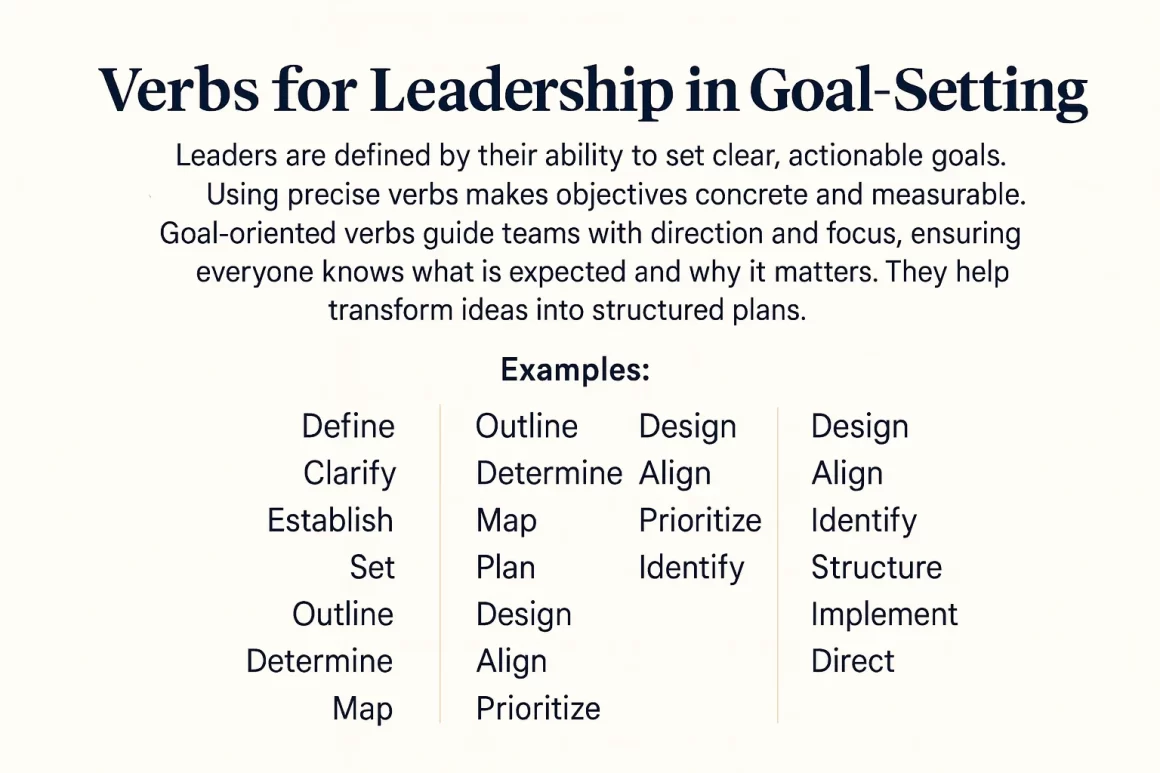
When leaders use goal-setting verbs, they provide clarity and eliminate ambiguity, creating alignment between vision and execution.
13. Verbs for Leadership in Decision-Making
Decision-making requires authority, confidence, and clarity. Leaders who use decisive verbs show they are capable of making tough calls and standing by them. These verbs project strength and instill trust, even when choices are challenging.
Examples:
- Decide
- Approve
- Resolve
- Select
- Confirm
- Endorse
- Sanction
- Accept
- Finalize
- Authorize
- Determine
- Recommend
- Choose
- Conclude
- Validate
Decision-making verbs reassure teams that leadership is confident, accountable, and capable of guiding the organization forward.
14. Verbs for Leadership in Innovation
Innovation keeps organizations relevant. Leaders who use inventive verbs inspire curiosity and creativity. These verbs reflect the ability to think differently, embrace new ideas, and challenge norms. They show that progress comes from experimentation and imagination.
Examples:
- Invent
- Develop
- Pioneer
- Innovate
- Create
- Build
- Design
- Introduce
- Launch
- Generate
- Adapt
- Explore
- Advance
- Evolve
- Reimagine
Innovation verbs spark excitement and encourage teams to take risks, making them essential for growth and transformation.
15. Verbs for Leadership in Motivation & Recognition
Recognition is one of the most powerful tools leaders have. The verbs they use to acknowledge contributions show appreciation and boost morale. Recognition verbs validate effort, inspire loyalty, and drive long-term engagement.
Examples:
- Recognize
- Appreciate
- Reward
- Acknowledge
- Celebrate
- Honor
- Commend
- Praise
- Value
- Highlight
- Thank
- Encourage
- Respect
- Applaud
- Endorse
When leaders consistently use recognition verbs, they create a culture of respect and motivation. Employees feel seen and valued, which in turn strengthens their performance and retention.
16. Verbs for Leadership in Conflict Resolution
Conflict is inevitable in any team, but strong leaders use the right language to ease tension and restore balance. Conflict-resolution verbs demonstrate calm authority, fairness, and the ability to create harmony. They help transform disputes into opportunities for growth and understanding.
Examples:
- Mediate
- Negotiate
- Harmonize
- Resolve
- Reconcile
- Balance
- Clarify
- Adjust
- Moderate
- Guide
- Restore
- Unite
- Diffuse
- Settle
- Facilitate
These verbs matter because they project empathy and control, showing that leaders can manage disagreements constructively and protect team cohesion.
17. Verbs for Leadership in Building Culture
Culture defines the identity of an organization. Leaders who choose culture-building verbs create workplaces where values, trust, and collaboration thrive. These verbs show care for long-term relationships and collective success.
Examples:
- Foster
- Cultivate
- Encourage
- Nurture
- Promote
- Support
- Develop
- Strengthen
- Celebrate
- Empower
- Shape
- Build
- Inspire
- Advance
- Connect
When leaders use such verbs, they build a culture that motivates people, retains talent, and aligns everyone with a shared mission.
18. Verbs for Inspirational Leadership
Inspiration is one of the most powerful qualities of leadership. Inspirational verbs spark passion, drive, and commitment. They remind people why their work matters and push them to aim higher.
Examples:
- Inspire
- Ignite
- Empower
- Encourage
- Motivate
- Lead
- Guide
- Champion
- Rally
- Elevate
- Spark
- Influence
- Drive
- Uplift
- Strengthen
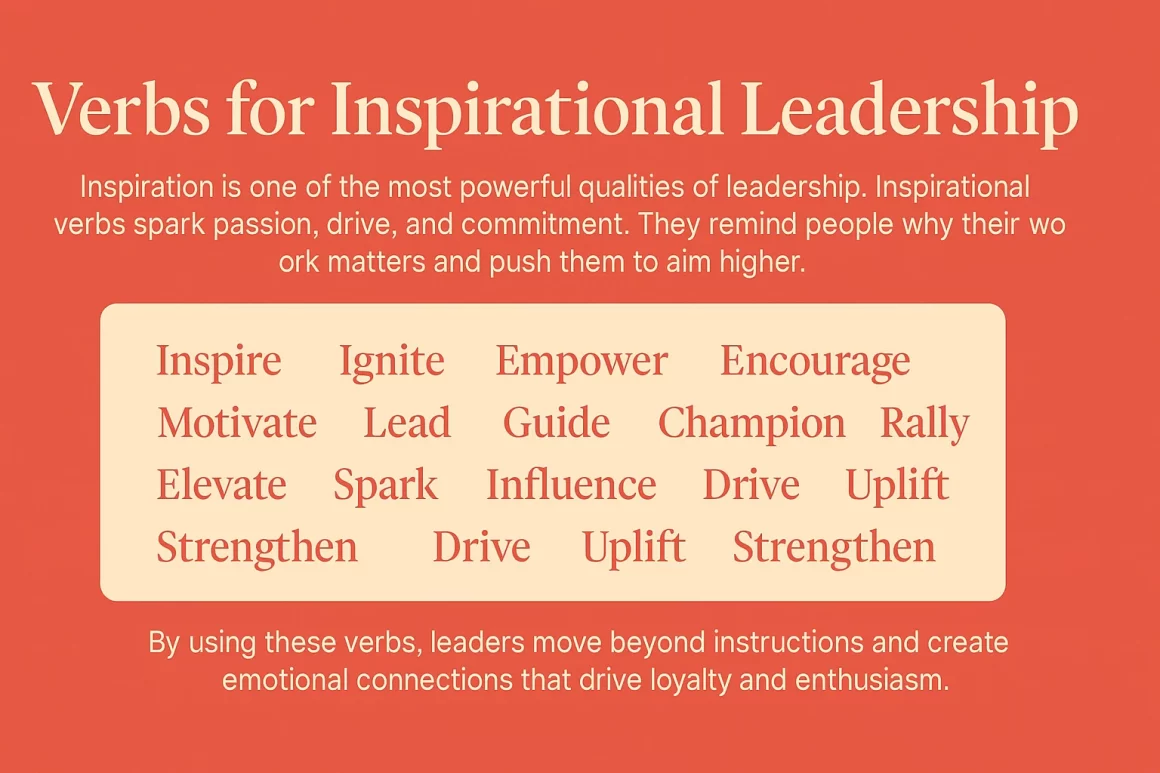
By using these verbs, leaders move beyond instructions and create emotional connections that drive loyalty and enthusiasm.
19. Verbs for Ethical Leadership
Ethics are the foundation of sustainable leadership. Ethical verbs demonstrate integrity, responsibility, and fairness. They reflect a leader’s commitment to doing the right thing, even when faced with challenges.
Examples:
- Respect
- Uphold
- Protect
- Safeguard
- Defend
- Honor
- Ensure
- Value
- Preserve
- Advocate
- Commit
- Support
- Guide
- Promote
- Maintain
These verbs signal transparency and accountability, showing that ethical leadership builds trust both inside and outside the organization.
20. Verbs for Servant Leadership
Servant leadership is about putting people first. Leaders who use servant verbs show humility, empathy, and a focus on the growth of others. These verbs highlight service rather than authority, creating trust and loyalty among teams.
Examples:
- Serve
- Listen
- Support
- Guide
- Encourage
- Empower
- Respect
- Care
- Nurture
- Assist
- Value
- Appreciate
- Mentor
- Protect
- Help
By using these verbs, leaders shift the focus from themselves to their teams, building stronger relationships and long-term commitment.
21. Verbs for Transformational Change Leaders
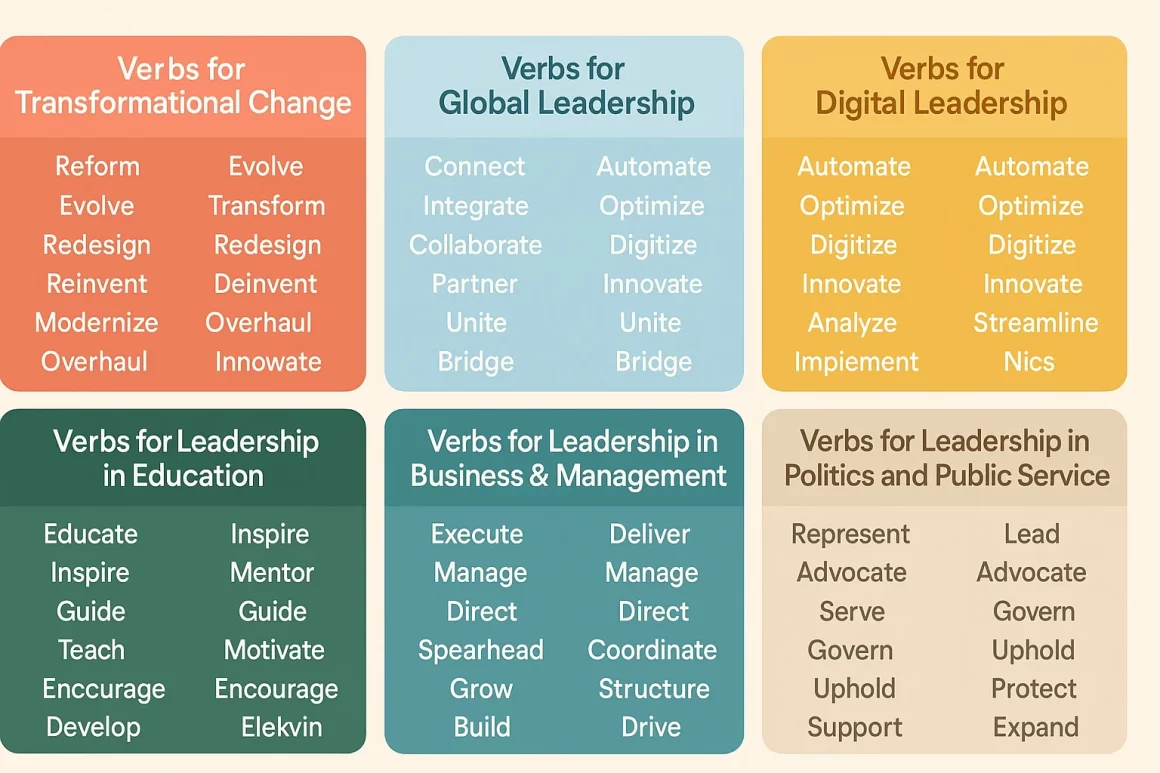
Change leaders guide organizations through evolution and transformation. Their verbs emphasize progress, reform, and breakthrough thinking. These words communicate boldness and inspire confidence in times of transition.
Examples:
- Reform
- Evolve
- Transform
- Redesign
- Reinvent
- Modernize
- Overhaul
- Innovate
- Advance
- Adapt
- Improve
- Reimagine
- Expand
- Reset
- Progress
Such verbs show that the leader is not afraid of change but embraces it, guiding others confidently into the future.
22. Verbs for Global Leadership
Global leaders must connect across cultures, geographies, and diverse perspectives. Their verbs reflect inclusivity, integration, and collaboration beyond borders. These words project openness and the ability to lead in a global context.
Examples:
- Connect
- Integrate
- Collaborate
- Partner
- Unite
- Bridge
- Adapt
- Share
- Exchange
- Align
- Respect
- Engage
- Harmonize
- Cooperate
- Support
Using global leadership verbs fosters cross-cultural trust and ensures smooth collaboration in international teams and organizations.
23. Verbs for Digital Leadership
In the digital age, leaders must show technological adaptability. Digital verbs highlight innovation, automation, and optimization in a fast-changing world. These verbs show readiness to embrace modern tools and trends.
Examples:
- Automate
- Optimize
- Digitize
- Innovate
- Analyze
- Implement
- Upgrade
- Streamline
- Modernize
- Secure
- Transform
- Launch
- Adapt
- Integrate
- Scale
Digital leadership verbs demonstrate agility, showing that leaders are prepared to guide organizations through technological transformation.
24. Verbs for Leadership in Education
Educational leaders shape minds and futures. Their verbs reflect teaching, guidance, and inspiration. These words build trust with learners and emphasize a commitment to growth and knowledge.
Examples:
- Educate
- Inspire
- Mentor
- Guide
- Teach
- Motivate
- Support
- Encourage
- Develop
- Instruct
- Advise
- Nurture
- Empower
- Enlighten
- Train
Educational leadership verbs highlight patience, clarity, and the ability to foster curiosity and lifelong learning.
25. Verbs for Leadership in Business & Management
Business leaders drive performance and results. Their verbs focus on execution, strategy, and accountability. These words showcase authority, organizational control, and measurable success.
Examples:
- Execute
- Deliver
- Manage
- Direct
- Spearhead
- Achieve
- Implement
- Grow
- Build
- Coordinate
- Optimize
- Structure
- Drive
- Monitor
- Expand
Strong business verbs show that leaders can balance vision with execution, ensuring sustainable corporate success.
26. Verbs for Leadership in Politics and Public Service
Political leaders rely on trust, transparency, and representation. Their verbs demonstrate service, advocacy, and the ability to unite citizens.
Examples:
- Represent
- Lead
- Advocate
- Serve
- Govern
- Uphold
- Protect
- Defend
- Support
- Unite
- Guide
- Respect
- Champion
- Empower
- Reform
Political leadership verbs remind citizens that leaders exist to serve people first and protect shared values.
27. How to Use Leadership Verbs Effectively
Choosing the right leadership verb depends on context. In speeches, pick verbs that inspire and energize. In reports or resumes, use verbs that prove authority and achievement. In coaching, choose verbs that guide and support.
Leaders should also avoid overusing the same verbs, as repetition can weaken impact. Instead, rotate between motivational, empowering, and transformational verbs to keep communication fresh.
Examples of verbs in action:
- Instead of “I managed a project,” say “I spearheaded and delivered a project.”
- Instead of “I helped the team,” say “I empowered and guided the team.”
- Instead of “I made decisions,” say “I evaluated, resolved, and finalized key decisions.”
Effective use of verbs makes communication precise, persuasive, and powerful.
Conclusion
Verbs are more than words—they are leadership tools. They shape how leaders are perceived, how teams respond, and how organizations move forward. From education to business, from politics to digital innovation, verbs for leadership carry authority, empathy, and vision.
Every leader should master the art of strong action verbs. They don’t just describe what leaders do—they inspire trust, spark motivation, and drive change. By choosing words with intention, leaders create a legacy of influence and impact.